
Hai Tang Pagoda worships both Buddha and local deities, serving the spiritual needs of local fishermen as well as Buddhist merchants and sailors from various countries who once stopped here to pray for safe journeys. Originally, the pagoda stood about 200 meters northeast of its current location. However, after being damaged by storms and harsh weather, local fishermen and merchants joined together to rebuild the temple in 1848 during the first year of Emperor Tu Duc’s reign at its present site.
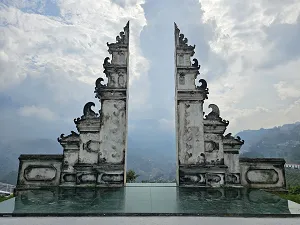
The temple is surrounded by stone walls built to protect it from snakes and wild animals. Its three-entrance gate stands approximately 5 meters high, 1.5 meters wide, and 6 meters long.
The name “Hai Tang” carries a symbolic meaning: “Hai” means sea, while “Tang” refers to the Tripitaka, the Buddhist scriptures. Together, the name suggests a place where the vast teachings of Buddhism gather like the immense ocean.
One of the pagoda’s most valuable treasures is a large ancient bronze bell. The dragon carved on the bell reflects the artistic style of the early Le Dynasty, indicating that the bell may even predate the construction of the pagoda itself.
Today, Hai Tang Pagoda no longer has a resident monk. Instead, an elderly couple takes care of the temple and its incense offerings. Besides being an important spiritual site, Hai Tang Pagoda has also become a popular attraction for visitors exploring Cu Lao Cham Island.