The Nguyen Dynasty, Vietnam’s last imperial dynasty, ruled the country through 13 emperors. Due to economic and political circumstances, only seven royal tomb complexes were constructed. Remarkably, all of them have survived to the present day, each showcasing a distinctive architectural style and reflecting the personality of the emperor it commemorates.
Unlike many royal burial sites around the world, the royal tombs of Hue were designed and built while the emperors were still alive. As a result, they are not gloomy mausoleums but rather harmonious landscapes that combine elegant architecture, tranquil gardens, lakes, and natural scenery.
Gia Long Tomb
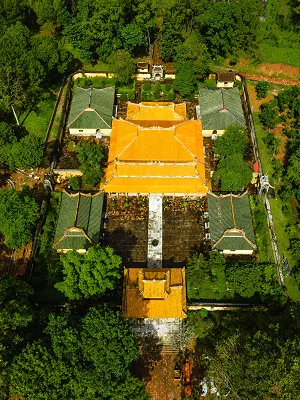
Known officially as Thien Tho Tomb, Gia Long Tomb was constructed between 1814 and 1820 within the vast Thien Tho Mountain range in Huong Tho Commune, west of Hue.
The tomb serves as the final resting place of Emperor Gia Long (1762–1820), the founder and first ruler of the Nguyen Dynasty. Covering a perimeter of more than 11 kilometers, the complex is considered one of the largest royal tombs in Vietnam.
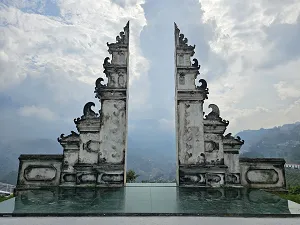
Following traditional feng shui principles, Dai Thien Tho Mountain stands in front of the tomb as a natural screen, while surrounding mountain ranges form the symbolic configuration of the “Azure Dragon” and the “White Tiger.” The majestic natural setting creates an atmosphere of serenity and grandeur rarely found elsewhere.
Khai Dinh Tomb
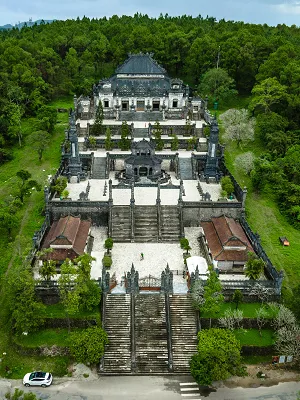
Located on the slopes of Chau Chu Mountain in Thuy Bang Commune, Khai Dinh Tomb is the resting place of Emperor Khai Dinh (1885–1925).
Although it is the smallest of the Nguyen royal tombs in terms of area, it is also the most elaborate and expensive. Construction took eleven years, from 1920 to 1931.
The tomb is renowned for its unique fusion of Eastern and Western architectural influences. Traditional Vietnamese imperial motifs blend with French, Roman, and Gothic elements, creating a striking monument unlike any other in Hue. The lavish decoration, intricate glass mosaics, and ornate interiors reflect the emperor’s taste for luxury and modernity.
Tu Duc Tomb
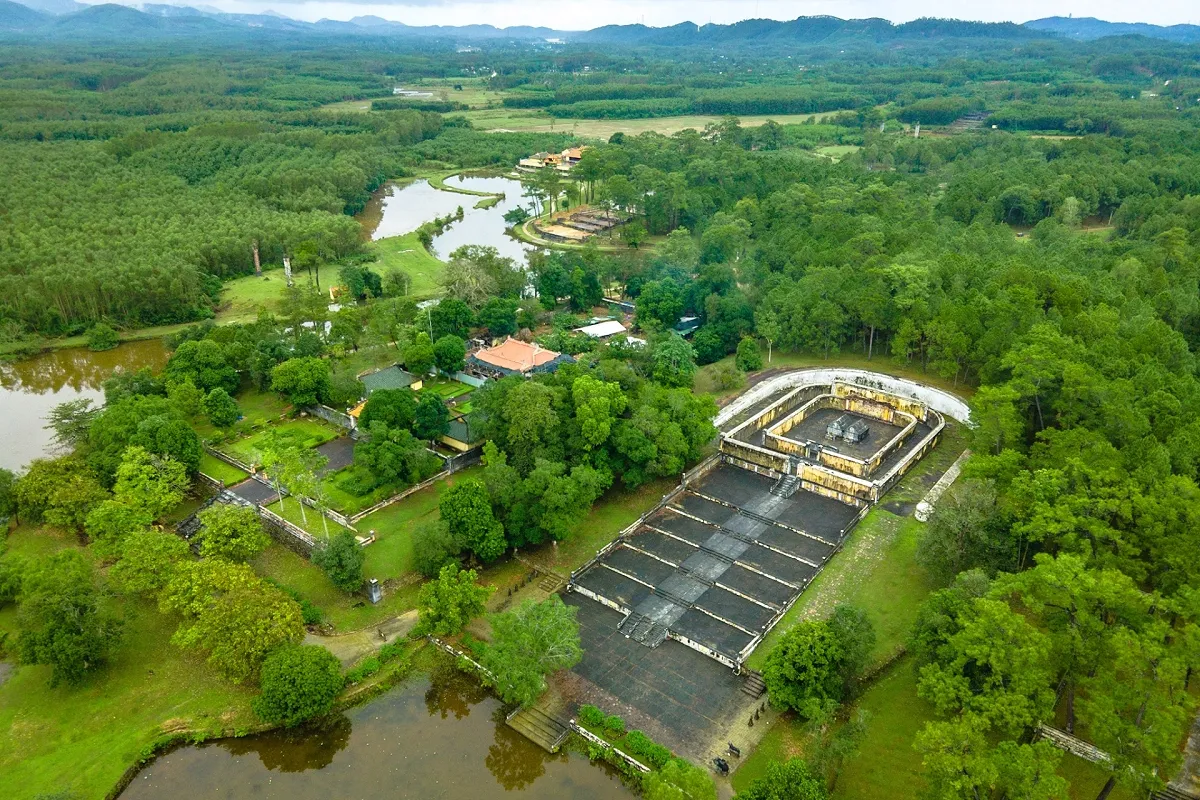
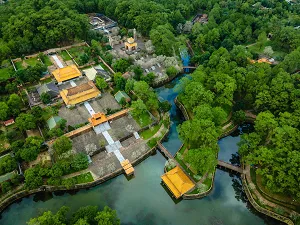
Nestled in a peaceful valley surrounded by pine-covered hills, Tu Duc Tomb, also known as Khiem Palace, is widely regarded as one of the most beautiful royal tombs in Hue.
Built between 1864 and 1867, the complex covers nearly 475 hectares and features almost 50 structures distributed throughout its palace and burial areas. Notably, the word “Khiem” appears in the names of nearly all buildings within the complex, reflecting the emperor’s philosophy of modesty.
With its graceful architecture, lotus-filled lakes, pavilions, and poetic landscapes, the tomb embodies the romantic spirit of Emperor Tu Duc, who was known as a scholar and poet. The harmonious blend of architecture and nature creates an atmosphere of elegance and tranquility.
Within the same complex lies the tomb of Emperor Kien Phuc, the seventh ruler of the Nguyen Dynasty and the adopted son of Emperor Tu Duc.
Duc Duc Tomb (An Lang)
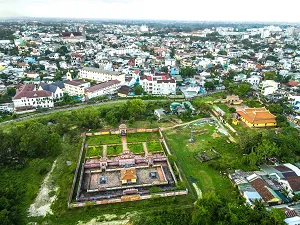
Located in An Cuu Ward, Hue City, Duc Duc Tomb, also known as An Lang, was constructed in 1889.
Unlike the grand royal mausoleums of other Nguyen emperors, the tomb features a relatively simple and modest design. It serves as the burial place of Emperor Duc Duc as well as Emperors Thanh Thai and Duy Tan, two rulers remembered for their resistance to French colonial rule.
The complex was carefully positioned according to traditional geomantic principles, with Phuoc Qua Hill in front, Tam Thai Mountain behind, and a flowing stream creating a peaceful and balanced landscape.
Minh Mang Tomb
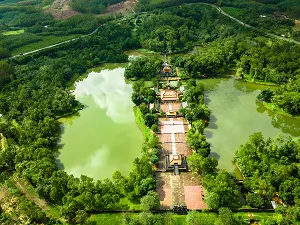
Often considered the most harmonious of all Nguyen royal tombs, Minh Mang Tomb, also known as Hieu Tomb, is celebrated for its perfect integration of architecture and nature.
Constructed between 1840 and 1843, the project required the labor of approximately 10,000 workers and soldiers. The tomb’s main entrance, Dai Hong Mon Gate, was opened only once to receive the emperor’s coffin and has remained closed ever since. Visitors now enter through the two side gates, Ta Hong Mon and Huu Hong Mon.
The complex features elegant courtyards, bridges, pavilions, and lotus ponds arranged along a carefully planned central axis. During summer, blooming lotus flowers and tranquil lakes add to the tomb’s picturesque beauty, making it one of Hue’s most photogenic historical sites.
Dong Khanh Tomb
Part of the Complex of Hue Monuments, Dong Khanh Tomb is located in the countryside of present-day Xuan Thuy Ward.
The tomb commemorates Emperor Dong Khanh (1864–1889), the ninth emperor of the Nguyen Dynasty. Unlike earlier royal tombs, its architecture reflects a transitional period in Vietnamese history, combining traditional imperial design with European influences introduced during the colonial era.
This unique blend of architectural styles makes Dong Khanh Tomb one of the most distinctive royal monuments in Hue. Today, the site is also associated with Emperor Ham Nghi, one of the most significant anti-colonial figures in Vietnamese history.
An Dinh Palace
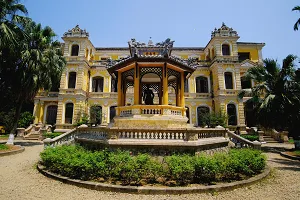
Often referred to as the “Summer Palace” of the Nguyen royal family, An Dinh Palace stands apart from the traditional architecture of Hue’s imperial monuments.
Built in the early twentieth century, the palace resembles a magnificent European-style mansion while still incorporating traditional Hue decorative motifs and royal symbolism. Recognized as part of the UNESCO World Heritage-listed Complex of Hue Monuments, An Dinh Palace is considered one of Vietnam’s finest examples of Neo-Classical architecture.
Its richly decorated interiors, elegant halls, and artistic details offer visitors a fascinating glimpse into the lifestyle of the Nguyen royal family during the final years of the dynasty. Today, An Dinh Palace remains one of Hue’s most impressive cultural and architectural landmarks.