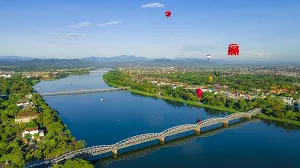
Among Vietnam's many historical landmarks, the Hue Imperial City stands as one of the most impressive and culturally significant destinations in the country. Located in the heart of Hue, the former capital of the Nguyen Dynasty, this vast complex of palaces, temples, gates, and royal residences offers visitors a fascinating journey into Vietnam's imperial past.
Recognized as part of the UNESCO World Heritage-listed Complex of Hue Monuments, the Imperial City remains one of the most visited attractions in Central Vietnam. Whether you're a history enthusiast, architecture lover, photographer, or first-time traveler, exploring Hue Imperial City is an essential experience.
In this guide, you'll discover the history, architecture, highlights, travel tips, and everything you need to know before visiting Vietnam's last royal capital.
The History of Hue Imperial City
The Imperial City was constructed in 1804 under Emperor Gia Long, the founder of the Nguyen Dynasty. Inspired by Beijing's Forbidden City, the complex was designed as the political, administrative, religious, and cultural center of Vietnam.
For nearly 143 years, from 1802 until 1945, Hue served as the nation's capital and home to thirteen Nguyen emperors.
The Imperial City witnessed many important events in Vietnamese history, including royal ceremonies, political decisions, foreign diplomatic visits, and eventually the end of the monarchy when Emperor Bao Dai abdicated in 1945.
Although parts of the complex suffered significant damage during wars in the 20th century, extensive restoration projects have helped preserve and revive this remarkable cultural treasure.
The Layout of the Imperial City
The Imperial City covers approximately 520 hectares and is protected by massive stone walls and a surrounding moat.
The complex is divided into three main sections:
The Citadel (Kinh Thanh)
The outer defensive area contains administrative buildings, military structures, and residential quarters.
The Imperial City (Hoang Thanh)
This area was reserved for royal ceremonies, state affairs, and important governmental functions.
The Forbidden Purple City (Tu Cam Thanh)
The innermost section served as the private residence of the emperor and royal family.
Only members of the royal court and authorized officials were permitted access to this exclusive area.
Ngo Mon Gate – The Main Entrance
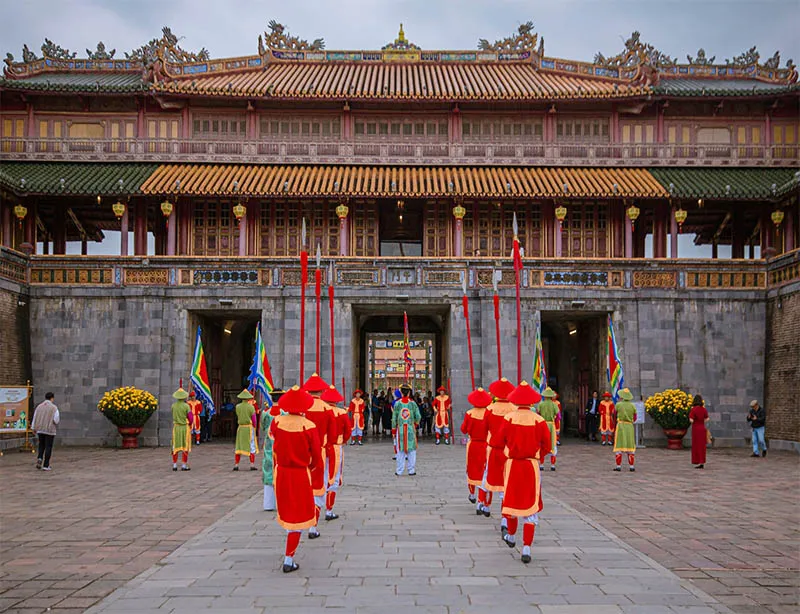
One of the most recognizable landmarks within the Imperial City is Ngo Mon Gate.
Built in 1833 under Emperor Minh Mang, this magnificent gate served as the principal entrance to the royal palace.
Key features include:
- Five entrance pathways
- Elegant traditional architecture
- Royal viewing platform
- Stunning symmetry
The emperor used the central entrance, while officials and members of the royal family entered through side gates according to their rank.
Today, Ngo Mon Gate remains one of the most photographed sites in Hue.
Thai Hoa Palace – The Hall of Supreme Harmony
Located directly beyond Ngo Mon Gate, Thai Hoa Palace was the ceremonial heart of the Nguyen Dynasty.
Important events held here included:
- Coronation ceremonies
- Royal celebrations
- Diplomatic receptions
- Major state functions
Inside the palace, visitors can admire:
- Golden lacquer decorations
- Dragon motifs
- Ornate wooden columns
- Traditional imperial architecture
The building reflects the grandeur and authority of Vietnam's last royal dynasty.
The Forbidden Purple City
Behind Thai Hoa Palace lies the Forbidden Purple City.
This area functioned as the emperor's private residence and was once home to:
- Royal family members
- Concubines
- Servants
- Trusted officials
Many original buildings were destroyed during conflicts, but restoration projects continue to revive sections of this historic area.
Walking through the Forbidden Purple City allows visitors to imagine daily life inside Vietnam's royal court.
Temples and Shrines Inside the Imperial City
The Imperial City is home to numerous temples dedicated to ancestors and former emperors.
Among the most important are:
The Mieu Temple
Dedicated to Nguyen emperors and regarded as one of the most sacred sites in the complex.
Hung To Temple
Built to honor the ancestors of the Nguyen Dynasty.
Trieu To Temple
Another significant spiritual site where royal rituals were performed.
These temples showcase traditional Vietnamese religious architecture and ancestral worship practices.
Nine Dynastic Urns
Located near The Mieu Temple are the Nine Dynastic Urns.
Cast during the reign of Emperor Minh Mang, these massive bronze urns symbolize the power and permanence of the Nguyen Dynasty.
Each urn represents a specific emperor and features detailed carvings depicting:
- Mountains
- Rivers
- Animals
- Plants
- Cultural symbols
The urns are considered masterpieces of Vietnamese bronze craftsmanship.
Architectural Highlights
One of the most fascinating aspects of the Imperial City is its architecture.
Visitors will notice a harmonious combination of:
Feng Shui Principles
The entire complex was carefully planned according to traditional Feng Shui concepts, balancing mountains, rivers, and directional alignments.
Traditional Vietnamese Design
Features include:
- Curved roofs
- Wooden structures
- Decorative dragons
- Intricate carvings
Symbolic Colors
Yellow was reserved exclusively for the emperor and appears throughout the complex.
Red symbolizes prosperity and happiness, while blue and green represent harmony with nature.
Best Photography Spots in Hue Imperial City
Photography enthusiasts will find countless opportunities inside the complex.
Popular locations include:
Ngo Mon Gate
Perfect for wide-angle architectural shots.
Thai Hoa Palace
Beautiful details and symmetrical designs.
Courtyards and Gardens
Ideal for portraits and cultural photography.
Ancient Corridors
Excellent for capturing depth and historical atmosphere.
Sunset Views
Late afternoon light creates a magical ambiance throughout the site.
For the best photos, visit early in the morning when crowds are smaller and lighting conditions are ideal.
How Long Should You Spend Here?
Most travelers spend between 3 and 5 hours exploring the Imperial City.
History enthusiasts may wish to allocate an entire day to fully appreciate the site's architecture, museums, temples, and restored buildings.
Hiring a local guide can significantly enhance the experience by providing historical context and fascinating stories about the Nguyen emperors.
Best Time to Visit Hue Imperial City
January to April
Pleasant temperatures and clear skies make this one of the best seasons for sightseeing.
May to August
Sunny weather provides excellent conditions for photography, though temperatures can be quite hot.
September to December
Rain is more frequent, but the city becomes quieter and less crowded.
For the most comfortable experience, visit early in the morning or late afternoon.
Visitor Tips
- Wear comfortable walking shoes.
- Bring water during hot months.
- Allocate at least half a day for exploration.
- Consider hiring a local guide.
- Visit early to avoid tour group crowds.
- Carry a camera for photography opportunities.
- Combine your visit with nearby attractions such as Thien Mu Pagoda and the royal tombs.
Nearby Attractions
After exploring the Imperial City, visitors can continue their Hue adventure by visiting:
- Thien Mu Pagoda
- Dong Ba Market
- Khai Dinh Tomb
- Minh Mang Tomb
- Tu Duc Tomb
- Perfume River
- Thuy Xuan Incense Village
These sites help create a deeper understanding of Hue's cultural and historical significance.
Final Thoughts
The Hue Imperial City is more than just a historical attraction—it is the heart of Vietnam's imperial heritage. Its grand gates, royal palaces, sacred temples, and beautifully restored architecture offer a unique glimpse into the country's last dynasty and centuries of royal tradition.
Whether you're interested in history, architecture, photography, or cultural exploration, the Imperial City provides one of the most rewarding travel experiences in Vietnam. As the centerpiece of Hue's UNESCO-listed heritage sites, it remains an essential destination for anyone visiting Central Vietnam.