Located in Central Vietnam, Hue is a city where history, culture, and natural beauty come together. Once the capital of the Nguyen Dynasty and the political center of Vietnam for more than a century, Hue remains one of the country's most fascinating destinations. From ancient palaces and royal tombs to delicious local cuisine and peaceful riverside scenery, Hue offers visitors a unique glimpse into Vietnam's imperial past.
Unlike bustling cities such as Hanoi or Ho Chi Minh City, Hue moves at a slower pace. Travelers come here to explore UNESCO-listed heritage sites, cruise along the Perfume River, enjoy traditional music performances, and savor some of Vietnam's finest cuisine.
If you're planning a trip to Central Vietnam, this comprehensive Hue travel guide will help you discover the best attractions, local experiences, travel tips, and suggested itineraries.
Where is Hue?
Hue is located in Thua Thien Hue Province in Central Vietnam, approximately:
- 100 km north of Da Nang
- 140 km north of Hoi An
- 650 km south of Hanoi
- 1,050 km north of Ho Chi Minh City
The city sits along the banks of the Perfume River, surrounded by mountains, lagoons, and beautiful countryside.
Because of its strategic location, Hue is often included in a Central Vietnam itinerary alongside Da Nang and Hoi An.
Why Visit Hue?
Hue offers a completely different atmosphere from other Vietnamese destinations.
Here are some reasons why travelers love Hue:
Rich Imperial History
Hue served as the capital of the Nguyen Dynasty from 1802 to 1945. Many of Vietnam's most important historical landmarks are located here, including the Imperial City, royal tombs, temples, and ancient pagodas.
UNESCO World Heritage Sites
Hue's Complex of Monuments was recognized as a UNESCO World Heritage Site in 1993, attracting history enthusiasts from around the world.
Incredible Local Cuisine
Hue cuisine is famous throughout Vietnam for its sophisticated flavors, royal influences, and diverse street food culture.
Scenic Landscapes
Visitors can enjoy riverside views, mountain panoramas, lagoons, beaches, and countryside villages all within a short distance of the city center.
Authentic Local Culture
Compared to more touristy destinations, Hue maintains a strong connection to its traditions and local lifestyle.
Best Time to Visit Hue
Spring (January to March)
Spring is one of the most pleasant times to visit Hue.
Temperatures range between 20°C and 28°C, with mild weather and relatively low rainfall.
This season is ideal for sightseeing and photography.
Summer (April to August)
Summer is considered the peak tourist season.
Expect sunny skies and temperatures ranging from 28°C to 38°C.
This is the perfect time for outdoor exploration and nearby beach excursions.
Autumn (September to November)
Autumn brings cooler temperatures but also increased rainfall.
The city becomes greener and less crowded, offering a peaceful travel experience.
Winter (December)
Winter can be cool and occasionally rainy, with temperatures around 18°C to 24°C.
While not ideal for beach activities, it's a great season for cultural exploration.
How to Get to Hue
By Air
Phu Bai International Airport serves Hue and offers domestic flights from:
- Hanoi
- Ho Chi Minh City
- Da Lat
- Hai Phong
The airport is approximately 15 km from the city center.
By Train
Many travelers consider the train journey between Da Nang and Hue one of the most scenic railway routes in Southeast Asia.
The route passes through the famous Hai Van Pass and offers stunning coastal views.
By Bus
Sleeper buses connect Hue with major cities across Vietnam, making it a budget-friendly transportation option.
By Private Car
Travelers staying in Da Nang or Hoi An often choose private transfers, which allow stops at:
- Hai Van Pass
- Lang Co Beach
- Lap An Lagoon
Top Attractions in Hue
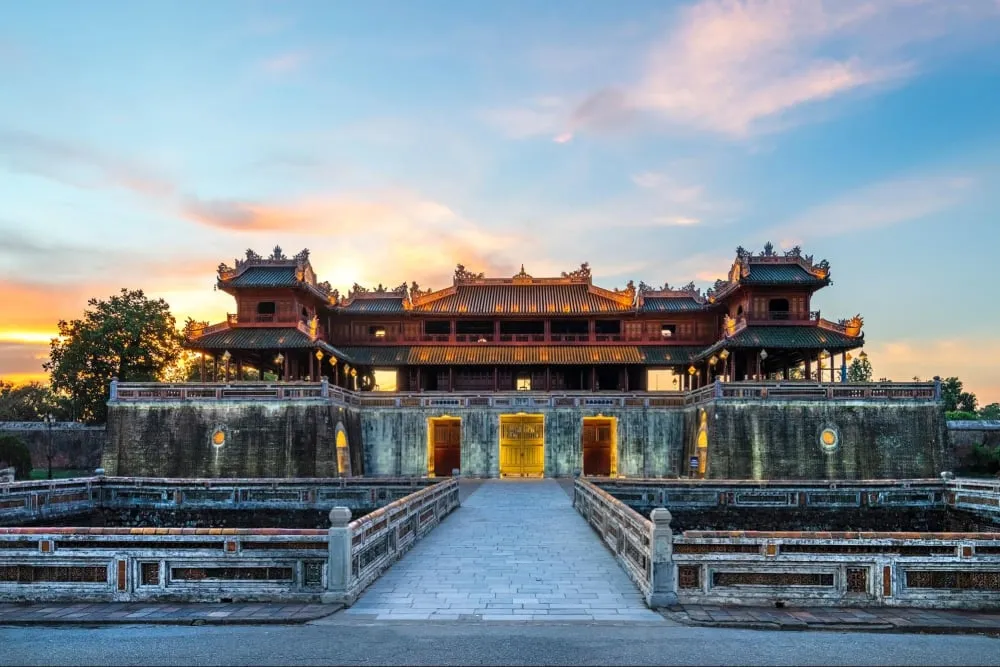
Hue Imperial City
The Imperial City is the most iconic attraction in Hue.
Built in the early 19th century, it served as the political and cultural center of the Nguyen Dynasty.
Highlights include:
- Ngo Mon Gate
- Thai Hoa Palace
- Forbidden Purple City
- Royal Temples
Visitors should allocate at least half a day to fully explore the complex.
Thien Mu Pagoda
Located on a hill overlooking the Perfume River, Thien Mu Pagoda is one of Vietnam's most famous religious landmarks.
Its seven-story tower has become a symbol of Hue.
Khai Dinh Tomb
This elaborate royal tomb combines Vietnamese and European architectural influences.
The intricate mosaic decorations and dramatic hillside setting make it one of Hue's most visited monuments.
Minh Mang Tomb
Known for its harmony with nature, Minh Mang Tomb is often considered the most beautiful royal tomb in Hue.
Tu Duc Tomb
Surrounded by pine forests and lakes, Tu Duc Tomb offers visitors a peaceful retreat and insight into royal life.
Dong Ba Market
For an authentic local experience, visit Dong Ba Market.
Here you can sample local food, shop for souvenirs, and observe daily life in Hue.
Best Things to Do in Hue
Cruise the Perfume River
A dragon boat cruise offers a relaxing way to admire Hue's riverside scenery.
Sunset cruises are particularly popular among photographers.
Watch Traditional Hue Royal Music
Nha Nhac, or Vietnamese Court Music, originated in Hue and is recognized by UNESCO as an Intangible Cultural Heritage.
Explore Local Villages
Nearby villages provide opportunities to discover traditional crafts, incense making, and local farming practices.
Ride Through the Countryside
Cycling around Hue reveals hidden temples, rice fields, lotus ponds, and quiet rural landscapes.
Visit Hai Van Pass
One of Vietnam's most spectacular mountain roads is just a short drive from Hue.
The panoramic views make it a favorite destination for road-trip enthusiasts.
What to Eat in Hue
Hue is often considered Vietnam's culinary capital.
Some must-try dishes include:
Bun Bo Hue
A flavorful beef noodle soup known for its rich broth and spicy character.
Banh Beo
Small steamed rice cakes topped with shrimp and crispy pork skin.
Banh Nam
Flat rice dumplings wrapped in banana leaves.
Banh Bot Loc
Transparent tapioca dumplings filled with shrimp and pork.
Com Hen
A local specialty made with baby clams, rice, herbs, and peanuts.
Che Hue
Traditional sweet soups available in dozens of varieties.
Suggested 3-Day Hue Itinerary
Day 1
- Explore the Imperial City
- Visit Dong Ba Market
- Enjoy sunset along the Perfume River
Day 2
- Visit Minh Mang Tomb
- Explore Khai Dinh Tomb
- Discover Tu Duc Tomb
- Watch a traditional music performance
Day 3
- Visit Thien Mu Pagoda
- Explore local villages
- Sample Hue street food
- Relax at a riverside café
Travel Tips for Visiting Hue
- Start sightseeing early to avoid midday heat.
- Wear comfortable shoes for exploring historical sites.
- Bring cash when visiting local markets.
- Rent a bicycle for a more authentic experience.
- Allocate at least two full days to discover Hue's major attractions.
- Combine Hue with Da Nang and Hoi An for a complete Central Vietnam adventure.
Final Thoughts
Hue is much more than a historical destination. It is a city where Vietnam's imperial heritage, rich culinary traditions, and peaceful landscapes create an unforgettable travel experience. Whether you're fascinated by history, passionate about food, or simply seeking a slower and more authentic side of Vietnam, Hue deserves a place on your travel itinerary.
From magnificent royal palaces and ancient pagodas to flavorful local dishes and scenic river views, Hue continues to captivate travelers from around the world. If you're planning a journey through Central Vietnam, make sure this former imperial capital is at the top of your list.