Rising 3,143 meters above sea level, Fansipan Peak is the highest mountain in Vietnam and throughout the Indochina Peninsula. Known as the "Roof of Indochina," this iconic destination is one of the most visited attractions in northern Vietnam and a highlight of every trip to Sapa.
Once accessible only through challenging multi-day treks, Fansipan can now be reached by a modern cable car system, allowing travelers of all ages to experience one of Southeast Asia's most spectacular mountain summits.
Whether you're seeking breathtaking views, cloud-hunting adventures, cultural landmarks, or spiritual experiences, Fansipan offers an unforgettable journey above the clouds.
Where Is Fansipan Peak?
Fansipan belongs to the Hoang Lien Son Mountain Range and is located approximately 9 kilometers southwest of Sapa Town in Lao Cai Province.
The mountain lies within Hoang Lien National Park, one of Vietnam's most important biodiversity reserves.
Its high elevation creates a unique ecosystem and climate, making it one of the country's most remarkable natural attractions.
Why Is Fansipan Famous?
Fansipan is famous for several reasons:
- Highest mountain in Vietnam
- Highest peak in Indochina
- Spectacular sea of clouds
- Scenic cable car journey
- Buddhist spiritual complex
- Incredible mountain landscapes
- Sunrise and sunset photography
For many travelers, reaching Fansipan is the highlight of their northern Vietnam adventure.
How to Get to Fansipan Peak
Step 1: Travel to Sapa Town
Most visitors first travel from Hanoi to Sapa by:
- Limousine bus
- Sleeper bus
- Overnight train
- Private car
The journey typically takes between 5 and 8 hours depending on the chosen transportation.
Step 2: Take the Muong Hoa Mountain Train
The journey to Fansipan usually begins at the Muong Hoa Mountain Railway Station near Sapa Town Center.
This scenic mountain train offers stunning views of:
- Muong Hoa Valley
- Rice terraces
- Mountain landscapes
- Forest-covered hills
The train ride lasts approximately 6–8 minutes.
Step 3: Ride the Fansipan Cable Car
After arriving at the cable car station, visitors board one of the world's most impressive cable car systems.
Cable Car Highlights
- Approximately 15–20 minutes ride time
- Panoramic mountain views
- Sea of clouds
- Deep valleys
- Dense forests
The ride itself is considered a world-class attraction.
Step 4: Reach the Summit
After exiting the cable car, visitors have two options:
Option 1: Mountain Train
A short mountain train ride takes visitors close to the summit.
Option 2: Climb the Stairs
Those seeking a more adventurous experience can climb approximately 600 stone steps to reach the peak.
Along the way, travelers can explore various temples and viewpoints.
Attractions at Fansipan Peak
The Summit Marker
The summit marker is the most photographed location on Fansipan.
Standing beside the iconic metal pyramid signifies reaching the highest point in Indochina.
Many travelers consider this a bucket-list achievement.
Sea of Clouds
One of Fansipan's most magical attractions is the sea of clouds.
Under the right weather conditions, clouds fill the valleys below, creating the illusion of floating above the sky.
The best times to witness this phenomenon are:
- Early morning
- Winter months
- After rainfall
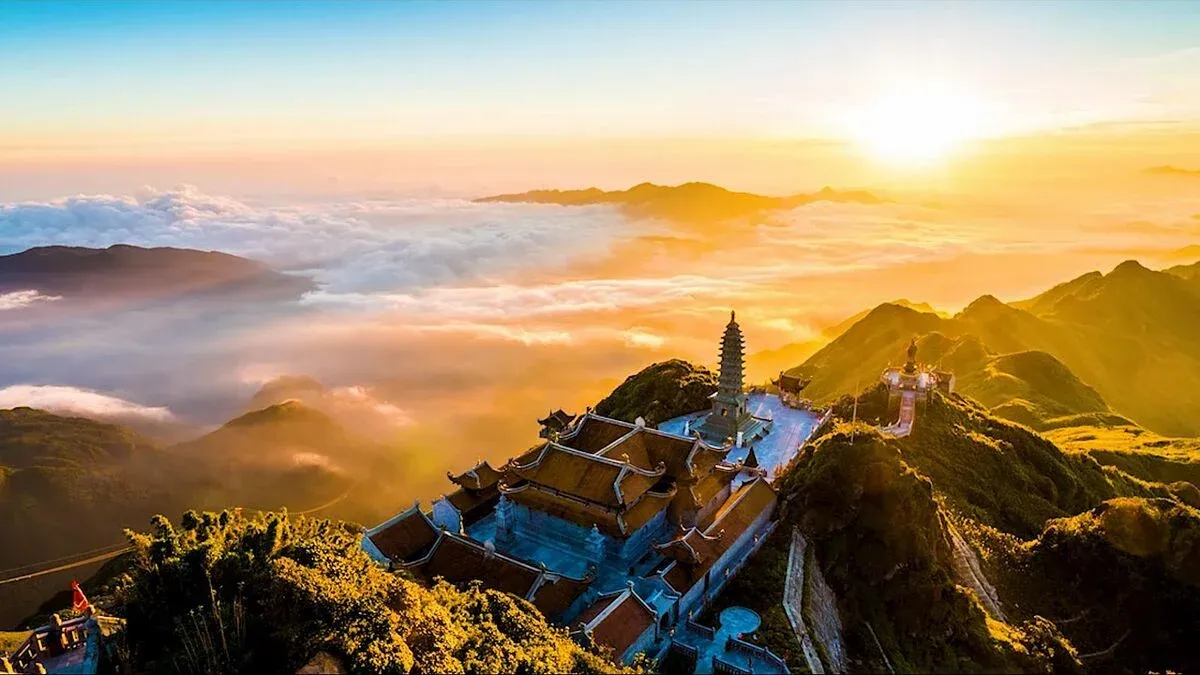
Buddhist Spiritual Complex
Fansipan is home to one of Vietnam's most impressive mountain spiritual destinations.
The complex includes:
- Pagodas
- Temples
- Prayer halls
- Buddhist statues
- Sacred monuments
The architecture blends beautifully with the surrounding mountain scenery.
Amitabha Buddha Statue
One of the most remarkable landmarks is the giant bronze Amitabha Buddha statue.
Standing among the clouds and mountains, it is considered one of Vietnam's most important spiritual attractions.
The statue creates an unforgettable sight, especially when surrounded by mist.
Kim Son Bao Thang Tu
This magnificent mountain temple is one of the highest Buddhist structures in Vietnam.
Visitors often stop here to admire the architecture, enjoy the peaceful atmosphere, and take photographs.
Best Time to Visit Fansipan
Spring (February – May)
Spring offers:
- Blooming flowers
- Pleasant temperatures
- Clear skies
- Excellent visibility
Many travelers consider spring one of the best seasons to visit.
Summer (June – August)
Benefits include:
- Green mountain landscapes
- Cooler temperatures than Hanoi
- Lush vegetation
However, afternoon rain showers are common.
Autumn (September – November)
Autumn is arguably the best season.
Visitors enjoy:
- Clear weather
- Golden rice terraces below
- Excellent photography conditions
- Comfortable temperatures
Winter (December – February)
Winter creates a magical atmosphere.
Possible highlights include:
- Frost-covered landscapes
- Snowfall on rare occasions
- Sea of clouds
- Dramatic mountain scenery
Temperatures can be extremely cold, so warm clothing is essential.
Fansipan Ticket Information
Ticket prices vary throughout the year and may change depending on promotions and seasonal demand.
Typically, visitors need separate tickets for:
- Fansipan Cable Car
- Muong Hoa Mountain Railway
- Summit mountain train (optional)
It is recommended to check the latest prices before your trip.
Booking online can help avoid queues during peak travel seasons.
Best Photography Spots on Fansipan
Photography enthusiasts should not miss:
Summit Marker
The iconic proof of reaching the Roof of Indochina.
Buddha Statue
A magnificent backdrop for landscape photography.
Viewing Platforms
Perfect for capturing mountain panoramas.
Cloud Sea Viewpoints
Among the most breathtaking scenes in northern Vietnam.
Temple Complex
Combining cultural and natural beauty.
Essential Travel Tips
Dress in Layers
Weather can change rapidly at high elevations.
Bring:
- Light jacket
- Windbreaker
- Comfortable clothing
Wear Proper Footwear
The summit area contains many stairs and stone pathways.
Comfortable walking shoes are highly recommended.
Visit Early
Morning visits offer:
- Better visibility
- Fewer crowds
- Cooler temperatures
- Better cloud-hunting opportunities
Bring a Camera
Fansipan offers some of Vietnam's most spectacular mountain scenery.
You'll likely want plenty of photos.
Suggested Fansipan Half-Day Itinerary
Morning
- Depart Sapa Town
- Ride Muong Hoa Mountain Train
- Take Fansipan Cable Car
- Explore summit attractions
Midday
- Visit temples
- Photograph cloud views
- Enjoy lunch nearby
Afternoon
- Return to Sapa
- Visit Ham Rong Mountain or Cat Cat Village
Why Fansipan Should Be on Your Bucket List
Fansipan Peak is far more than a mountain summit. It combines breathtaking landscapes, spiritual landmarks, engineering achievements, and unforgettable experiences into one extraordinary destination.
Whether you're standing beside the summit marker, watching clouds drift beneath your feet, or exploring temples among the mountains, every moment on Fansipan feels truly special.
For anyone visiting northern Vietnam, conquering the Roof of Indochina is an experience that should not be missed.